The physical problem
Conventional optimization often treats supports as perfectly rigid. Soil is neither rigid nor passive, and its deformation can change the best load path completely.
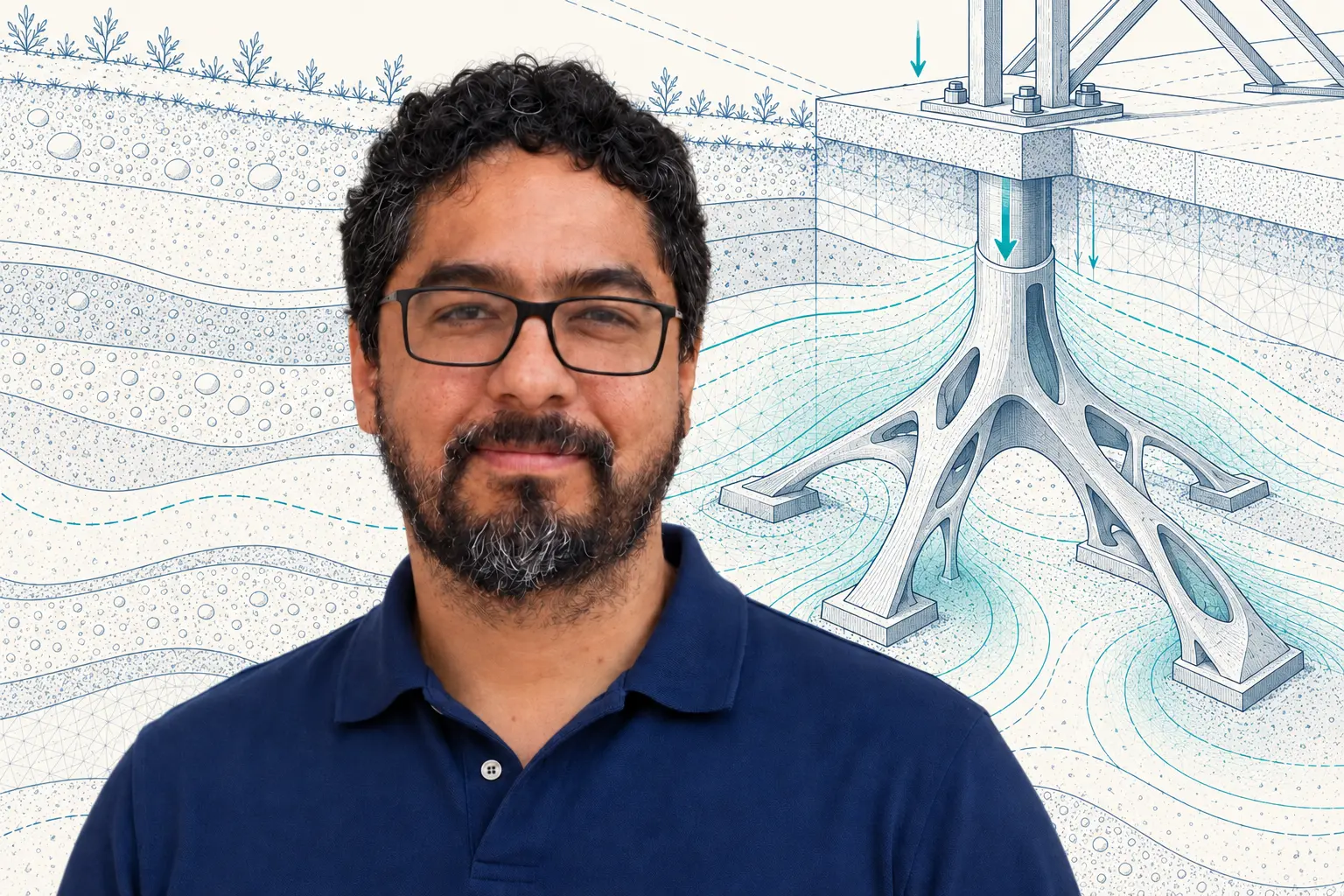
PhD candidate · Topology optimization in and under the ground
Can the ground help determine the most efficient shape of a structure?
Aldemar studies topology optimization when structures are buried, supported by flexible soil or inspired by the mechanics of root systems.
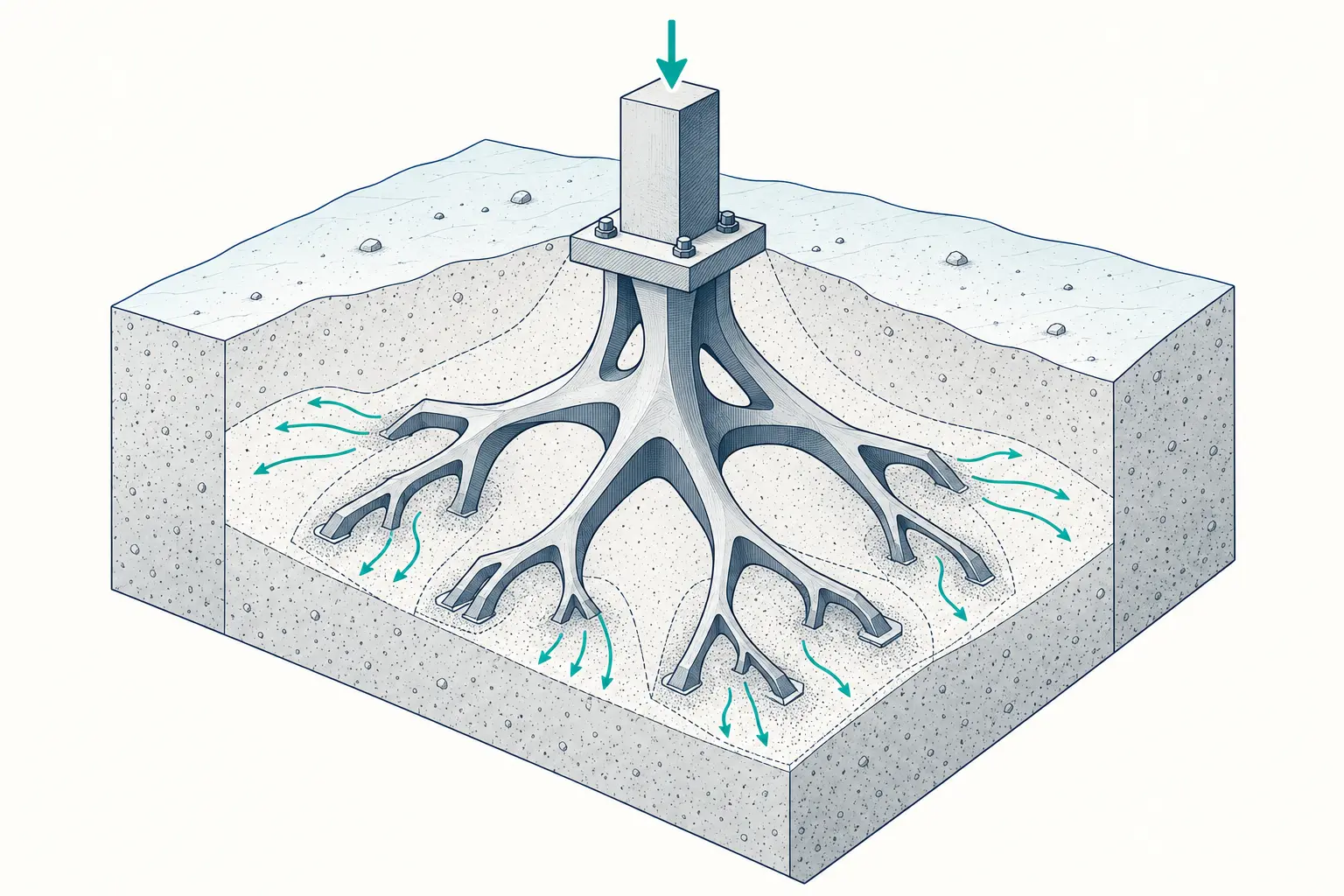
Conventional optimization often treats supports as perfectly rigid. Soil is neither rigid nor passive, and its deformation can change the best load path completely.
His research develops a general finite-element framework for foundations, bridges, tunnels and buried reinforcements. A related line investigates how root architectures balance anchorage, material use and interaction with the surrounding ground.
Designing with the ground can reveal lighter foundations, more effective reinforcements and new ways to understand natural anchorage.
Research evidence
Explore published studies, conference contributions and ongoing investigations.
Conference paper
The same optimization logic can be applied across foundations, bridge supports and buried linings when the deformable ground is included in the mechanical problem.
CILAMCE proceedingsPeer reviewed
For continuous-fibre additive manufacturing, the best topology depends on the printing orientation. A design optimized for one stacking sequence is not automatically the best design for another.
Journal article