
The physical problem
A foundation does not move independently from the structure above it or the soil around it. In a large pile group, every pile influences the others through a three-dimensional wave field.
PhD candidate · Dynamic soil-structure interaction
How do a structure, its foundation and dozens of piles move as one system?
Amanda develops unified models of flexible structures supported by interacting pile groups, including the transfer of energy through the soil.
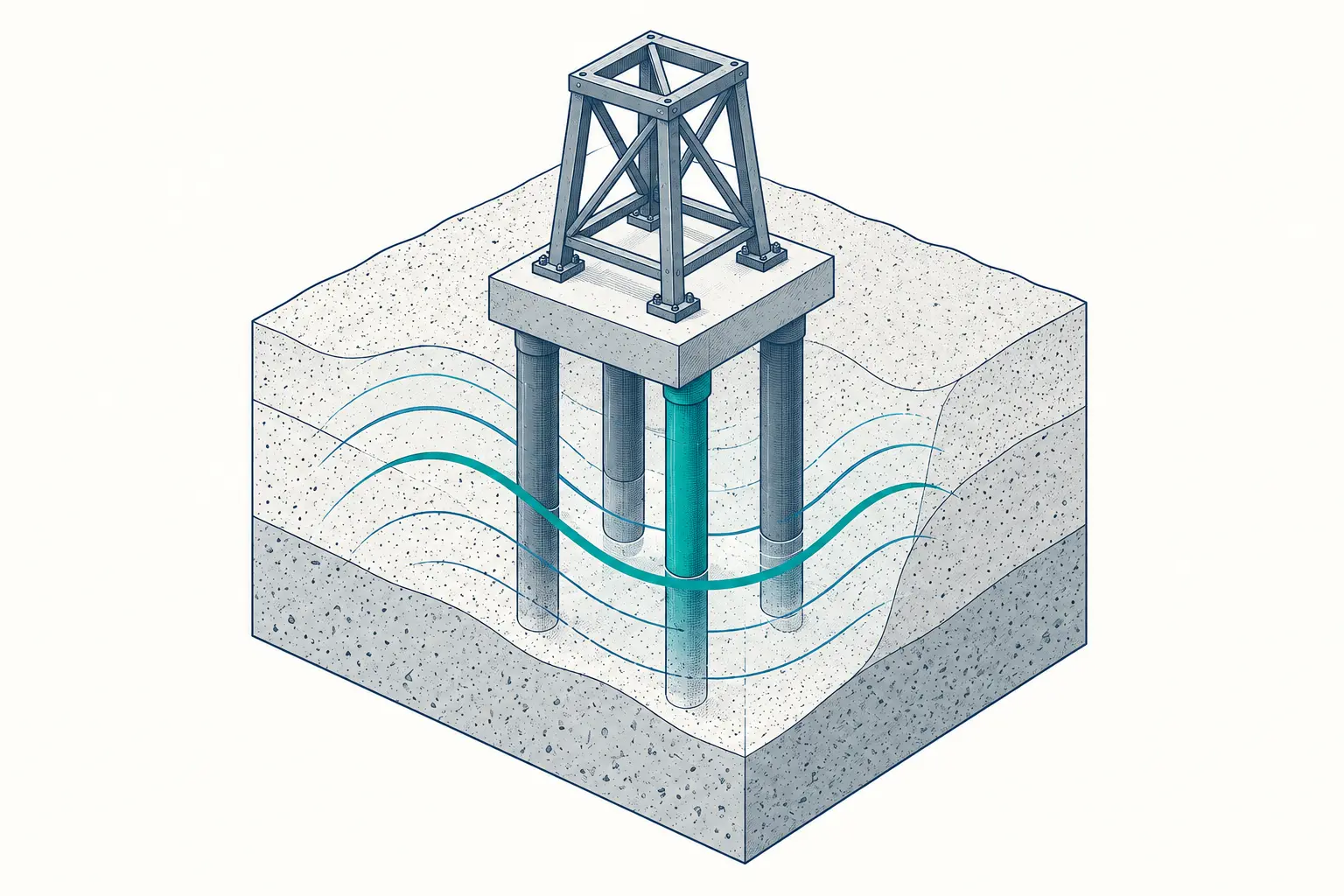
A foundation does not move independently from the structure above it or the soil around it. In a large pile group, every pile influences the others through a three-dimensional wave field.
Her research couples flexible superstructures, arbitrary pile layouts, soil response and contact in one computational formulation. The work includes nonstandard geometries such as ring-shaped pile groups supporting tower-like structures.
More faithful coupling helps engineers identify when a simplified foundation model is adequate and when the interaction itself controls the response.
Research evidence
Explore published studies, conference contributions and ongoing investigations.
Peer reviewed
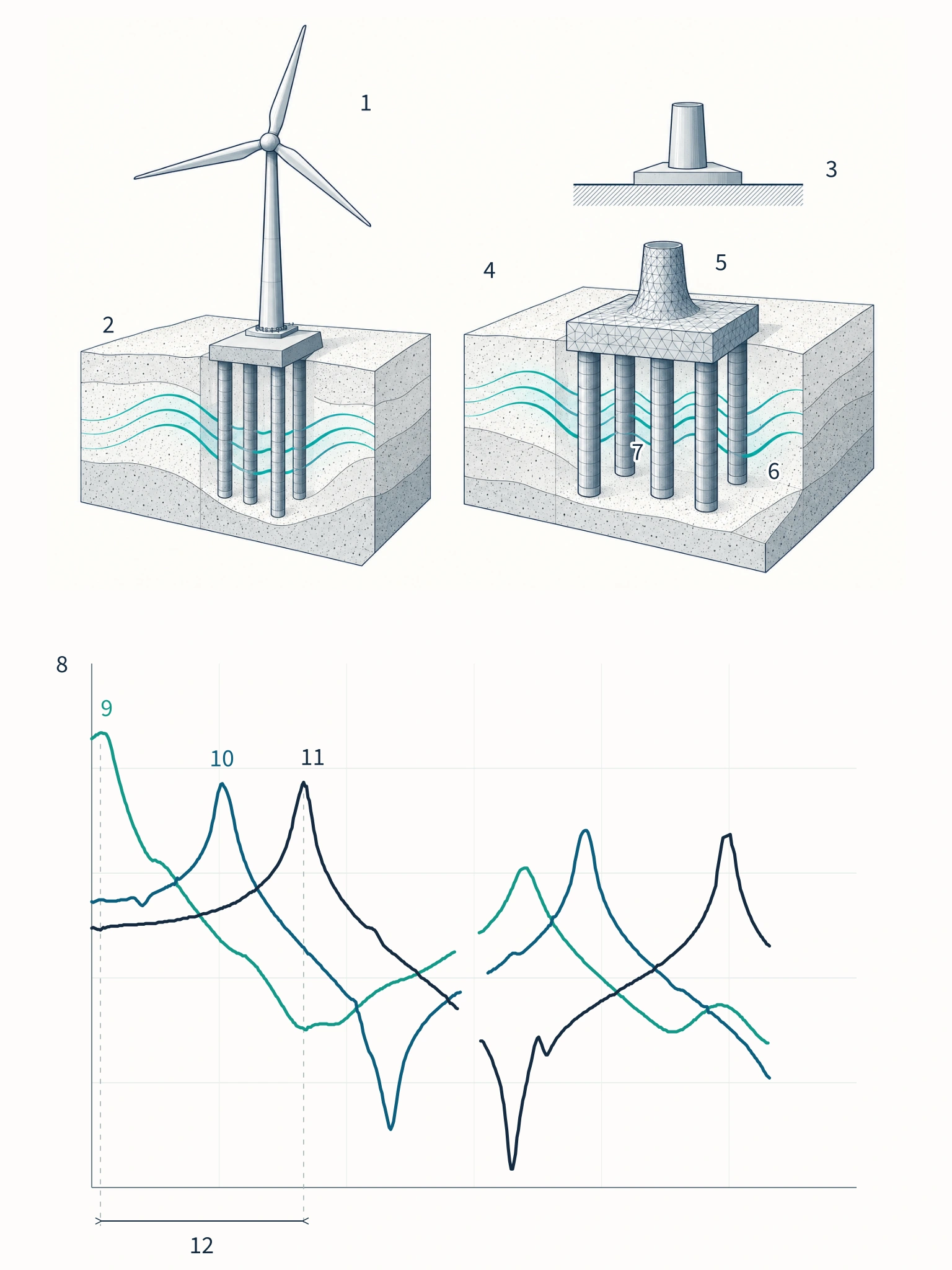
The receiving structure changes the vibration field rather than merely observing it. Increasing separation reduces transferred vibration, while structural height shifts the coupled resonances. Pile spacing cannot be reduced to one simple monotonic rule.
Dissertation
Amanda's MSc work established the coupled modelling basis that her PhD now extends toward flexible superstructures, arbitrary pile groups and richer contact conditions.
Unicamp repository