Indigenous students bring the experiences of their territories into engineering education, connecting climate questions with collective action.
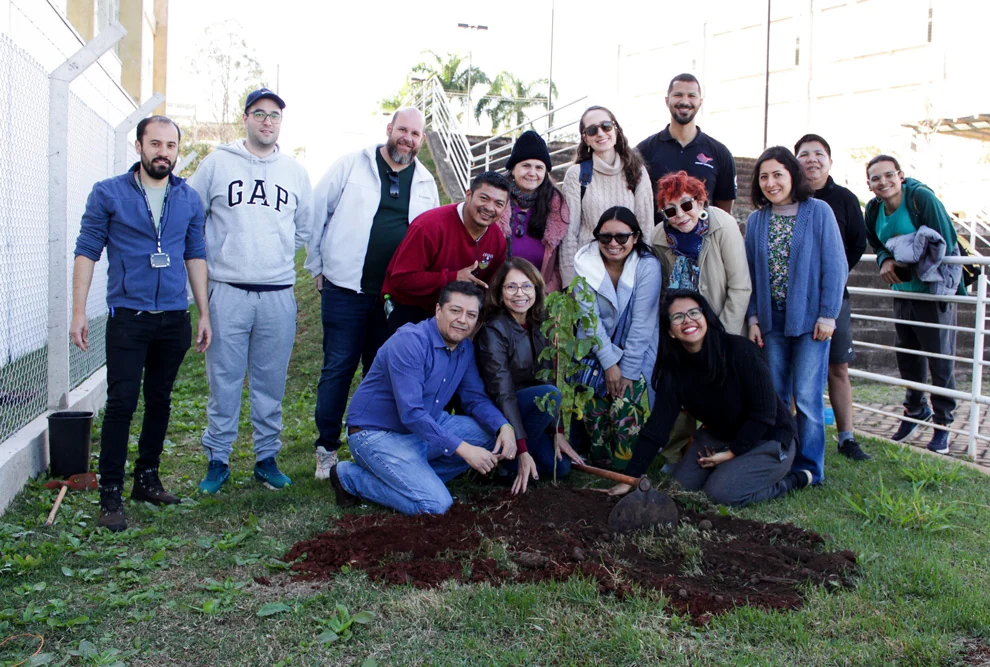
Closing activity, 7 July 2025. Photo: Rafael Marques da Silva / Educorp. Unicamp report ↗
Knowledge and territory
Climate learning begins with lived experience.
How does the climate emergency affect different territories, and whose knowledge helps us understand it? Through the Indigenous Sustainability Laboratory, we connect engineering education with the experiences and questions brought by Indigenous students.
The initiative is part of PRODS at Unicamp’s School of Mechanical Engineering. Coordinated by Amasa Carvalho through the Visiting Specialist Professor Programme (PPEV), it creates space for students to develop and discuss their own perspectives on sustainability.
Our collaboration with the Climate Emergency course connects this work with CAMEJA, Unicamp’s Advisory Commission on Ecological Change and Environmental Justice, within the Executive Directorate for Human Rights.
At “Vivências, Impactos Climáticos e Extensão”, students shared reflections, projects and actions developed during the semester. The meeting placed Indigenous experiences at the centre of the discussion about climate and university extension.
We presented this work at the sustainability symposium in Uberlândia and at COBENGE 2025, discussing curricular change and climate challenges in Indigenous territories.
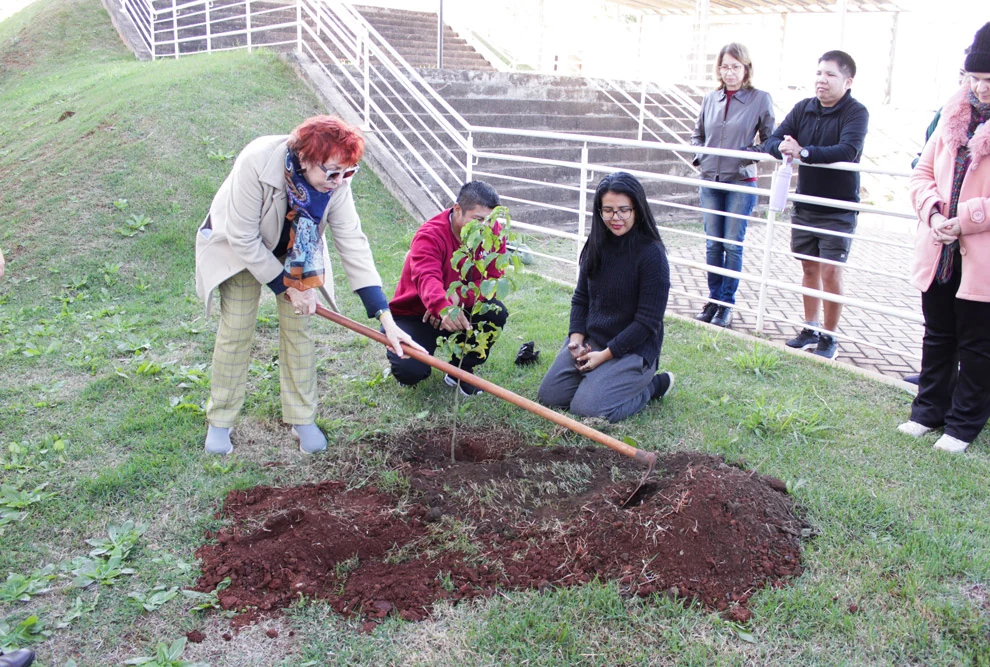
We closed the semester by planting an aldrago (Pterocarpus violaceus) beside Educorp. The activity brought together students, faculty and staff from the Climate Emergency course and the Indigenous Laboratory.
The planting connected our discussions of climate justice and ancestral knowledge with the care of a living place on campus. Unicamp’s report records the activity and the perspectives of its participants.
Our wider research community also studies the relationship between structures, territory and inherited knowledge through Ancestral Structures. Together, these initiatives open different ways to ask what engineering can learn from communities and their environments.