The physical problem
Underground movement is energetically demanding because the surrounding medium must be displaced while the body maintains enough contact to generate propulsion.
Undergraduate researcher · Bio-inspired excavation
What can earthworm burrowing teach us about flexible excavating robots?
Murilo models how an earthworm changes shape, pushes against the surrounding soil and advances through it, then translates those mechanisms into engineering principles.
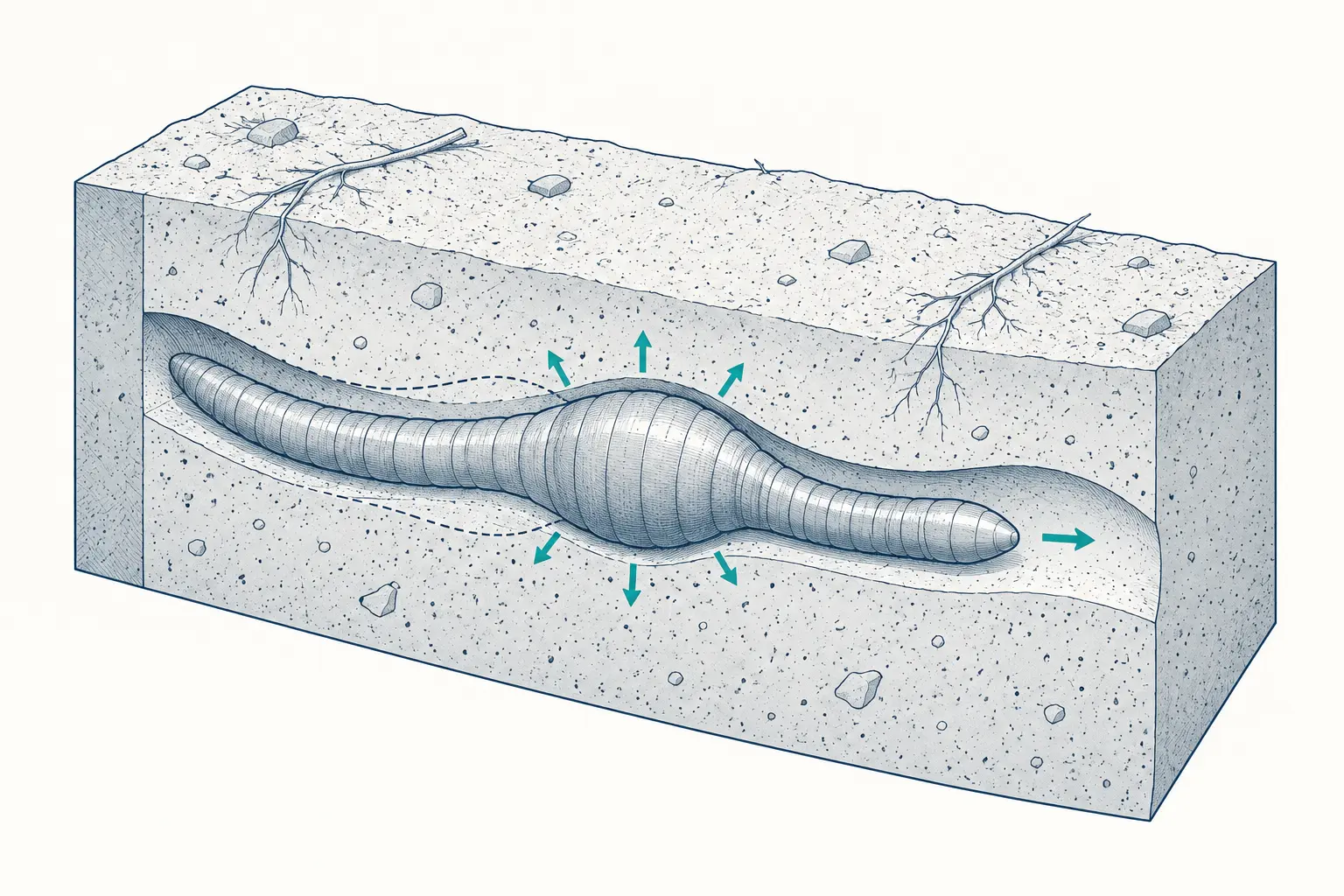
Underground movement is energetically demanding because the surrounding medium must be displaced while the body maintains enough contact to generate propulsion.
His formulation treats the organism as an axisymmetric hyperelastic tube driven by travelling peristaltic waves and coupled to a reduced soil cavity-expansion model. The work resolves body stress, soil stress, pressure, friction, motion and energetic scaling.
Bio-inspired excavation could lead to softer and less disruptive devices for sensing, inspection and operation below the ground surface.
Research evidence
Explore published studies, conference contributions and ongoing investigations.
Work in progress
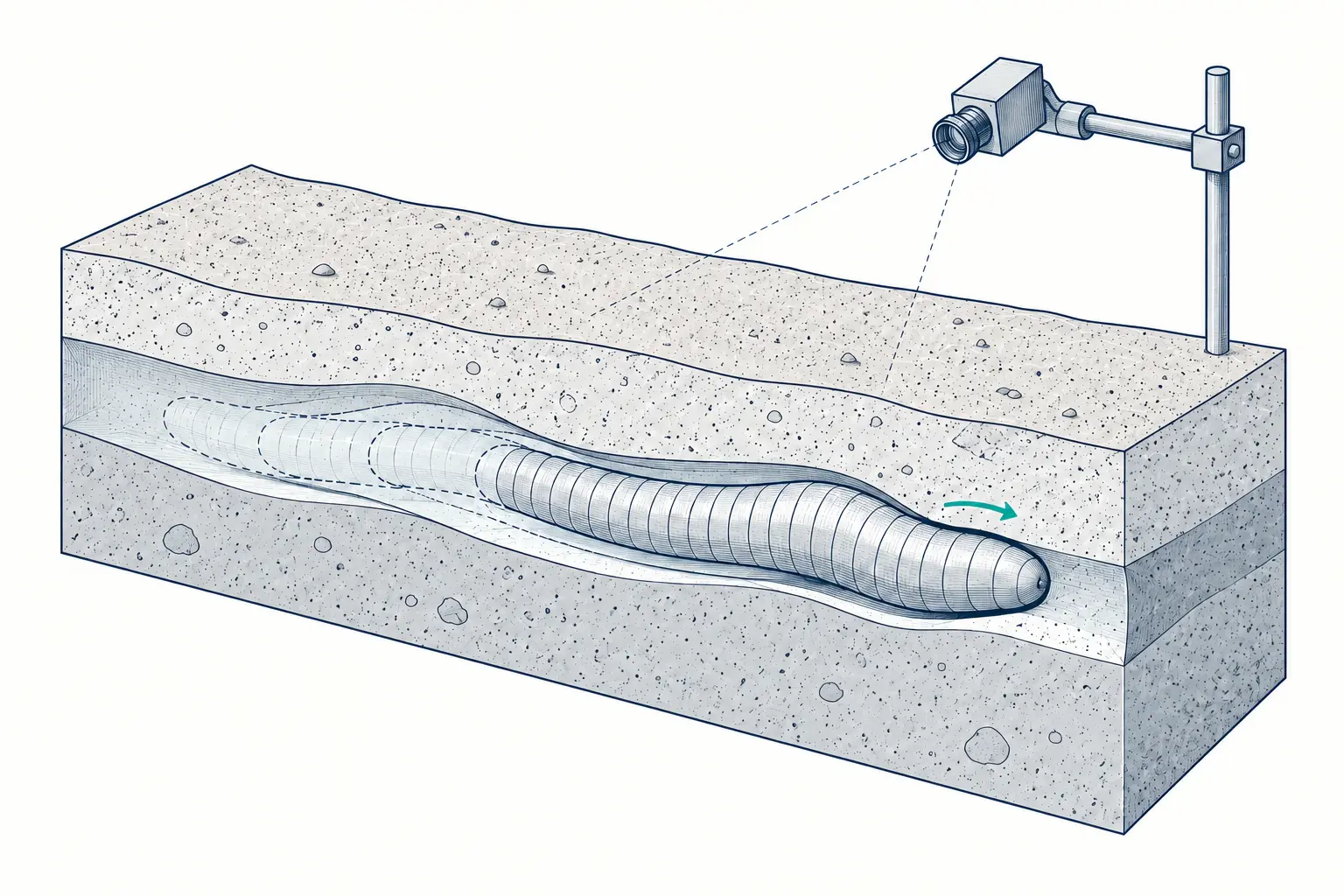
The simulated travelling deformation generates a sequence of anchoring and advancement. After constant rescaling, its overall trajectory follows the pulse-like progression seen in literature experiments, serving as a preliminary shape-level check rather than a full validation.
FAPESP project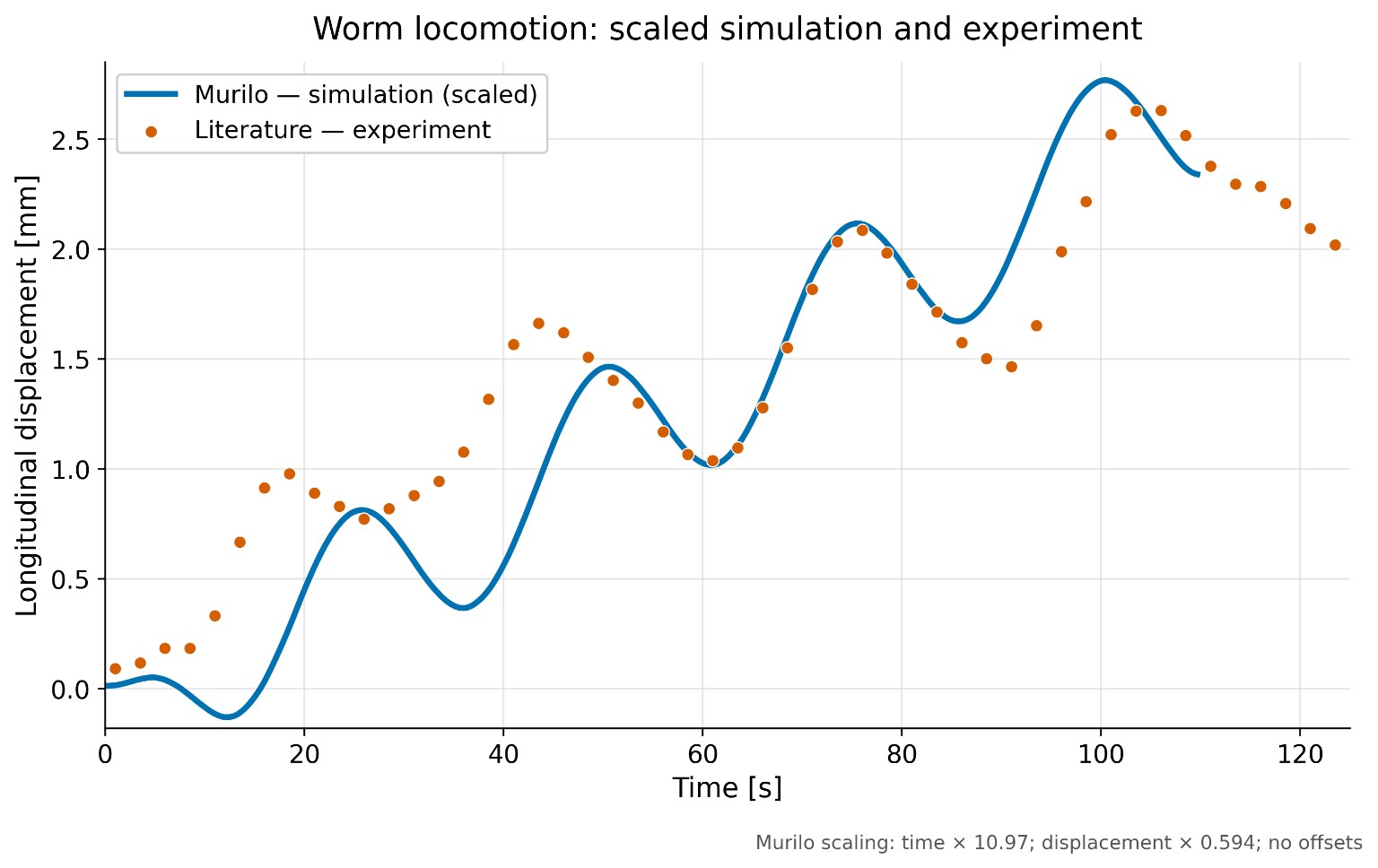
Work in progress
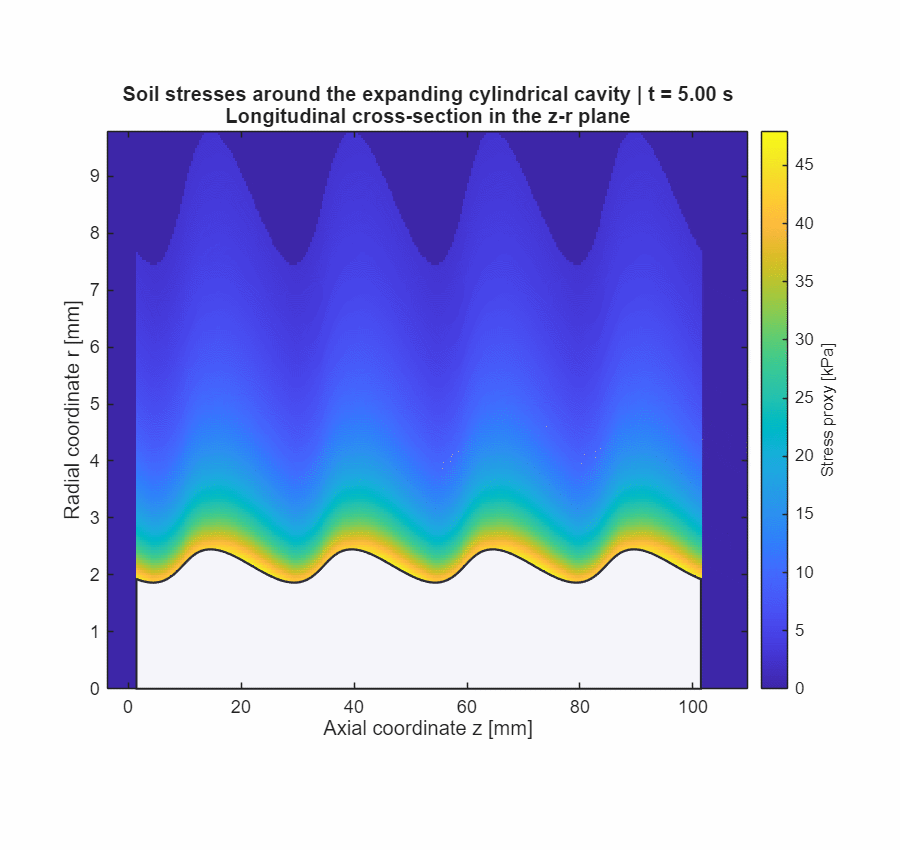
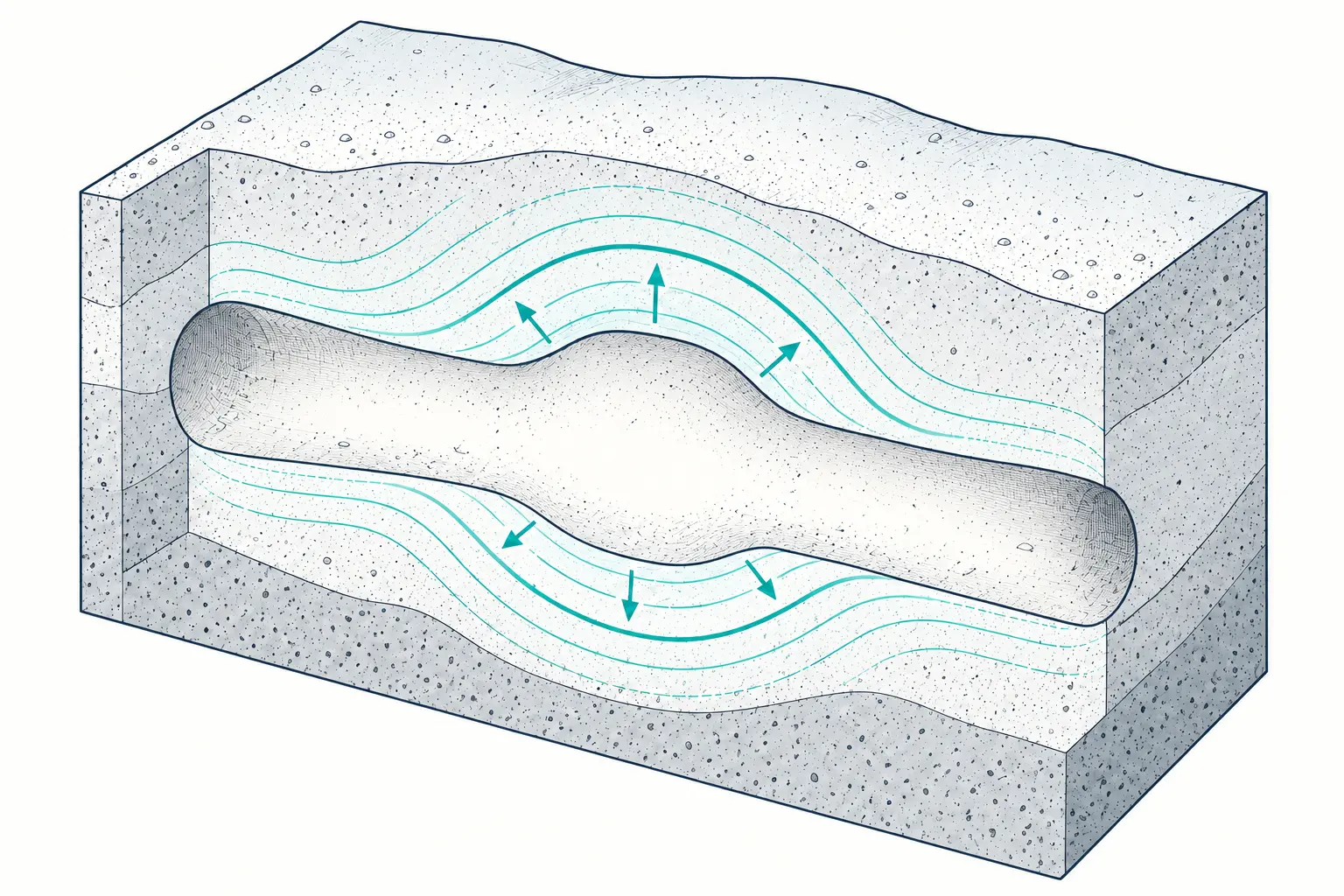
Each expanding body segment generates a localized stress concentration in the surrounding soil. The travelling pattern provides a mechanical bridge between prescribed body motion, anchorage and soil disturbance.
FAPESP IC project